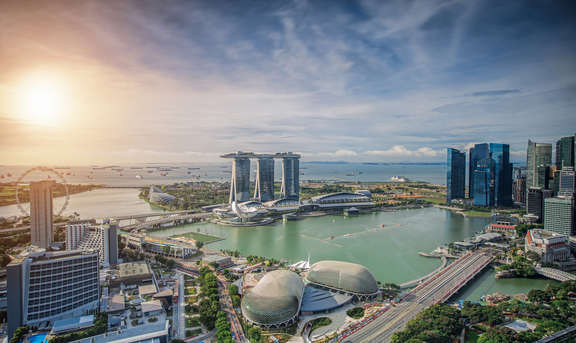
singapore economy overview stands as one of the most advanced and competitive economies in the world, despite its small geographic size and limited natural resources. It has built a highly efficient economic system centered on trade, finance, manufacturing, and services. Its strategic location along major global shipping routes has allowed it to evolve into a key international hub connecting Asia with global markets. The economy is highly open, meaning it depends significantly on international trade, foreign investment, and global demand cycles. This openness has made it both highly dynamic and sensitive to global economic changes.
Key Structural Pillars of Economic Strength
singapore economy overview of Singapore’s economy is built on a few tightly integrated pillars that support long-term stability and growth. These pillars include advanced manufacturing, financial services, international trade logistics, and a rapidly expanding digital economy. Each sector is carefully developed to complement the others, creating a balanced and resilient system.
Manufacturing is not low-cost or labor-intensive in Singapore; instead, it focuses on high-value production such as electronics, semiconductors, biomedical products, and precision engineering. This approach allows the country to remain globally competitive without relying on cheap labor.
Financial services act as a central engine, supporting banking, insurance, wealth management, and capital markets. Singapore is recognized as one of Asia’s leading financial centers, attracting multinational corporations and institutional investors.
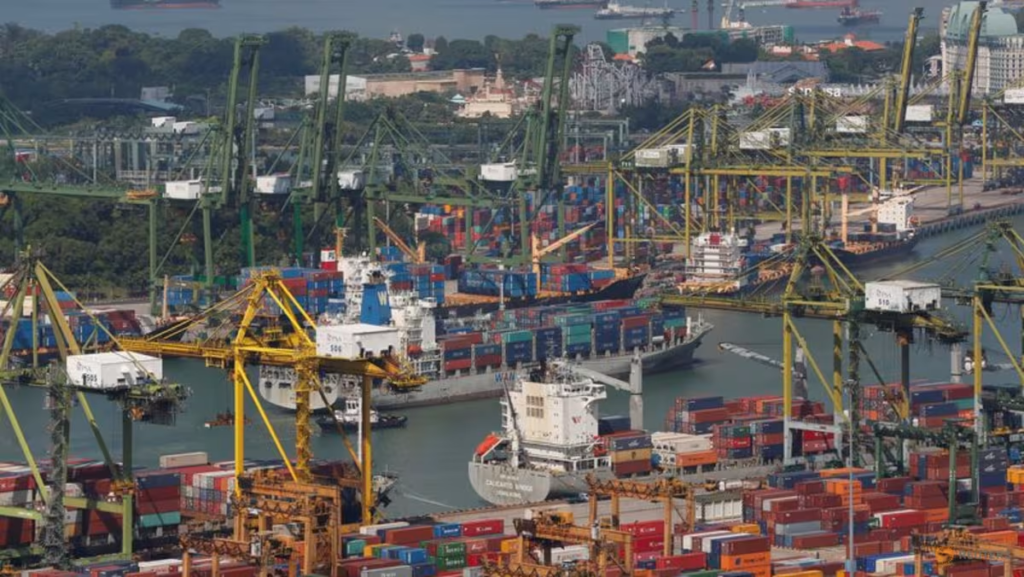
Trade and logistics further reinforce its position, with one of the world’s busiest ports and air cargo systems. The efficiency of customs processes, infrastructure, and digital trade systems ensures smooth global supply chain integration.
Manufacturing and Advanced Industrial Ecosystem
The manufacturing sector in Singapore is highly specialized and technology-driven. It focuses on industries that require advanced engineering capabilities, research integration, and strong intellectual property protection. Electronics manufacturing, particularly semiconductors, plays a crucial role in export earnings and industrial output.
Biomedical manufacturing has also expanded significantly, supported by strong government investment in research and innovation. Pharmaceutical production, medical technology, and life sciences contribute to both exports and high-skilled employment opportunities.
Unlike traditional manufacturing economies, Singapore emphasizes automation, robotics, and smart factory systems. This reduces dependence on manual labor and increases productivity per worker. The result is a manufacturing base that is compact but extremely high in value output.
Financial Services and Global Capital Flow Hub
Singapore’s financial ecosystem is one of the most developed in Asia. It serves as a regional headquarters for global banks, investment firms, insurance companies, and fintech startups. The financial system is supported by strong regulatory frameworks that ensure transparency, stability, and investor confidence.
Wealth management is a particularly strong segment, as Singapore attracts high-net-worth individuals from across Asia and beyond. Political stability, strong legal systems, and favorable tax structures contribute to this inflow of capital.
Fintech innovation is also rapidly reshaping the financial landscape. Digital payments, blockchain solutions, and AI-driven financial tools are increasingly integrated into the system, making Singapore a leader in financial technology adoption.
Trade, Logistics, and Global Connectivity Advantage
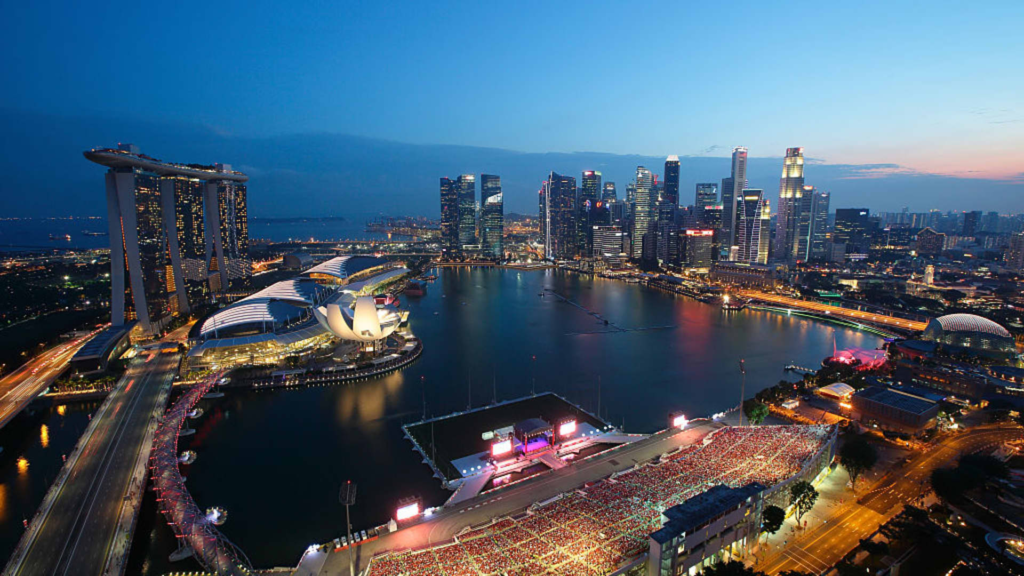
Trade has always been the foundation of Singapore’s economic success. The country functions as a major redistribution hub for goods moving between Asia, Europe, and the Americas. Its port infrastructure is among the most efficient in the world, handling massive cargo volumes with high automation and minimal delays.
Air cargo systems complement maritime trade, enabling high-speed transport of electronics, pharmaceuticals, and time-sensitive goods. Free trade agreements with multiple countries enhance market access and reduce trade barriers.
Singapore’s logistics sector is deeply integrated with digital systems, enabling real-time tracking, predictive supply chain management, and optimized shipping routes. This technological advantage strengthens its global competitiveness.
Technology and Digital Economy Expansion
The digital economy is one of the fastest-growing components of Singapore’s overall structure. Government-led initiatives have accelerated digital transformation across industries, including artificial intelligence, cybersecurity, cloud computing, and data analytics.
Startups and technology companies benefit from strong infrastructure and funding ecosystems. Singapore’s innovation hubs attract entrepreneurs from across Asia, particularly in fintech, healthtech, and enterprise software development.
Artificial intelligence is increasingly being integrated into both public and private sectors. From smart city infrastructure to automated business processes, technology is deeply embedded in the economic framework.
Cybersecurity has also become a strategic focus area due to the country’s digital dependency. Strong cybersecurity frameworks ensure safe financial transactions and protect critical infrastructure.
Government Economic Strategy and Planning Model
A defining feature of Singapore’s economy is its long-term strategic planning approach. Economic policies are designed with multi-decade foresight rather than short-term cycles. This allows consistent development across industries and ensures stability.
The government actively supports key sectors through incentives, research funding, and infrastructure investments. Economic development agencies work closely with global corporations to attract foreign direct investment and establish regional headquarters.
Education and skills development are also central to economic planning. Continuous upskilling programs ensure that the workforce adapts to technological changes and industry evolution.
Urban planning and economic planning are closely aligned, creating an integrated system where infrastructure, housing, and business development support each other efficiently.
Labor Market and Workforce Dynamics
Singapore’s labor market is highly skilled, diverse, and globally competitive. Due to limited population size, the country relies on both local talent and foreign professionals to meet workforce demands.
High emphasis is placed on education, technical training, and professional development. Universities and technical institutes are aligned with industry needs, ensuring a steady pipeline of skilled graduates.
Foreign labor also plays a role in supporting sectors such as construction, manufacturing, and services. However, the long-term focus remains on increasing productivity and reducing dependency on low-skilled labor.
Wages in Singapore reflect its high productivity economy, with strong demand for professionals in finance, engineering, technology, and healthcare.
Cost of Living and Economic Balance
One of the key characteristics of Singapore’s economy is the high cost of living, which is closely linked to its high-income structure. Housing, transportation, and consumer goods tend to be more expensive compared to regional neighbors.
However, this cost structure is balanced by high wages, strong employment rates, and high-quality public services. The government also provides housing schemes and subsidies to maintain affordability for citizens.
Economic policy aims to balance competitiveness with livability, ensuring that growth does not compromise social stability. This balance is a core reason behind Singapore’s long-term economic resilience.
Foreign Investment Climate and Global Confidence
Singapore consistently ranks as one of the most attractive destinations for foreign direct investment. Its political stability, strong legal system, and transparent regulatory environment make it highly trusted by global investors.
Multinational corporations often choose Singapore as their Asia-Pacific headquarters due to its strategic location and business-friendly ecosystem. Ease of doing business is enhanced by efficient digital systems, low corruption levels, and strong infrastructure.
Tax policies are structured to encourage investment while maintaining sustainable public revenue. This careful balance has helped Singapore remain globally competitive for decades.
Future Growth Drivers and Economic Transformation
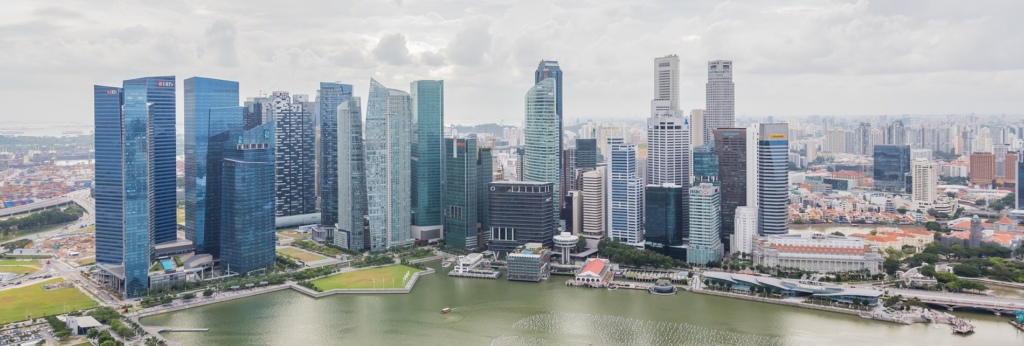
The future of Singapore’s economy is expected to be driven by innovation, sustainability, and digital transformation. Green energy initiatives and environmental sustainability programs are becoming increasingly important as global priorities shift toward climate responsibility.
Artificial intelligence, robotics, and automation will continue to reshape industries, increasing productivity and changing job structures. Singapore is also investing in research and development to strengthen its position in advanced technologies.
The financial sector is expected to expand further into digital assets, fintech innovation, and cross-border financial services. Meanwhile, biomedical sciences and healthcare innovation will continue to grow due to aging populations in the region.
Challenges and Economic Risks Ahead
Despite its strengths, Singapore faces several structural challenges. Heavy reliance on global trade makes it vulnerable to international economic fluctuations. Any slowdown in global demand can directly impact exports and industrial output.
Rising global competition from emerging financial and manufacturing hubs also presents long-term challenges. Countries in Southeast Asia are rapidly developing their own economic ecosystems, increasing regional competition.
Another challenge is demographic pressure, as an aging population may affect labor supply and increase healthcare costs. Maintaining productivity growth will be essential to offset these demographic shifts.
Final Insight on Singapore’s Economic Model
Singapore’s economy is a highly refined system built on efficiency, innovation, and global integration. It does not rely on natural resources but instead leverages strategic planning, human capital, and technological advancement. The combination of manufacturing excellence, financial leadership, trade dominance, and digital innovation makes it one of the most resilient economies globally.
Its future will depend on how effectively it adapts to technological disruption, demographic changes, and global economic shifts. However, its strong institutional framework and long-term planning approach position it well for continued stability and competitiveness in the global economy landscape.